
Slide and cassette sorting
You set the rack layout on screen. The system reads identifiers and sorts material into the selected locations.
Digital pathology and histopathology
Robotic post-analytical archiving: from the sorting workstation, through automated transport, to the digital LIS record.
An integrated system for automated sorting, safe transport, and long-term storage of microscope slides and histology cassettes. It replaces manual placement of slides and cassettes with full digital traceability, eliminating the risk of sample mix-ups and mechanical damage.
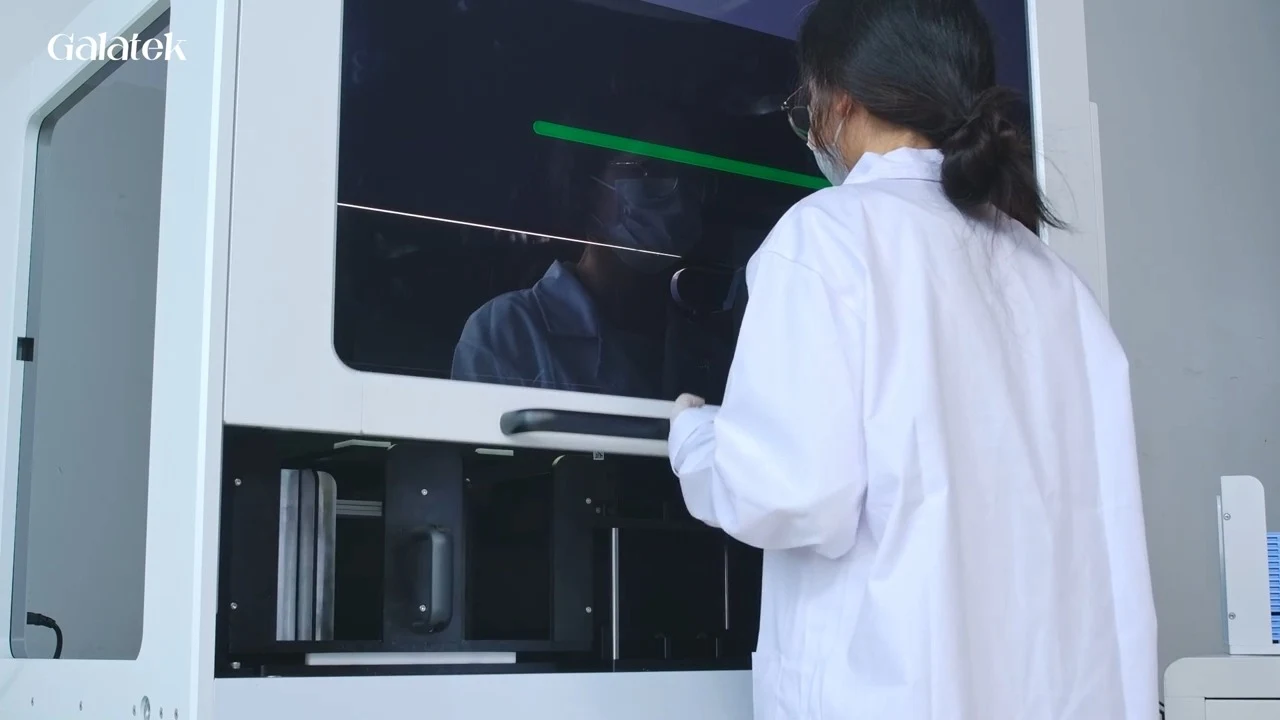
How it works
You set the rack layout on screen. The system reads identifiers and sorts material into the selected locations.
Slides with an unreadable identifier are directed to a separate rack so the operator can complete the data.
Scanning the rack assigns a cabinet location. Check-out and return update the record.
See it in action
See how identifiers are read, slides and cassettes are handled, and their locations are recorded in the archive.
Workflow
Set target locations in the workstation interface.
The system reads identifiers and distributes slides and cassettes into racks.
Automated transport connects the sorting workstation to the archive. The rack code assigns the storage location.
Check-out and return of slides and cassettes remain visible in the system.
System
The sorting workstation, automated transport, and digital record form one process. The system assigns an archive location and updates the record at check-out and return.
Technical documentation
Video source: Galatek, “Pathological Sample Storage and Sorting System,” September 2026.
Contact
Tell us about your sample format, the scale of storage, or your workflow. This is the starting point for a conversation about the device.